
Ask most people to picture a pergola and they’ll describe the same scene: a backyard patio, a dining table underneath, evening light filtering through the beams. It’s a lovely image, and there’s a reason it’s the default. But it’s only one option out of many. We’ve spent years installing louvered pergolas, retractable models, and custom shade structures at Smart Shade Structures, many in spots that catch even our most design-minded clients off guard.
Here’s what’s easy to forget. A good pergola isn’t just something nice to look at. It gives shape to open space, offers real shade and shelter, and – if you ask the right real estate agent – can add genuine value to a property. The moment you stop thinking of it as a patio accessory, a lot more becomes possible.
So here are four places worth a second look.
1. Rooftop Terraces: Taking Outdoor Living Up a Level
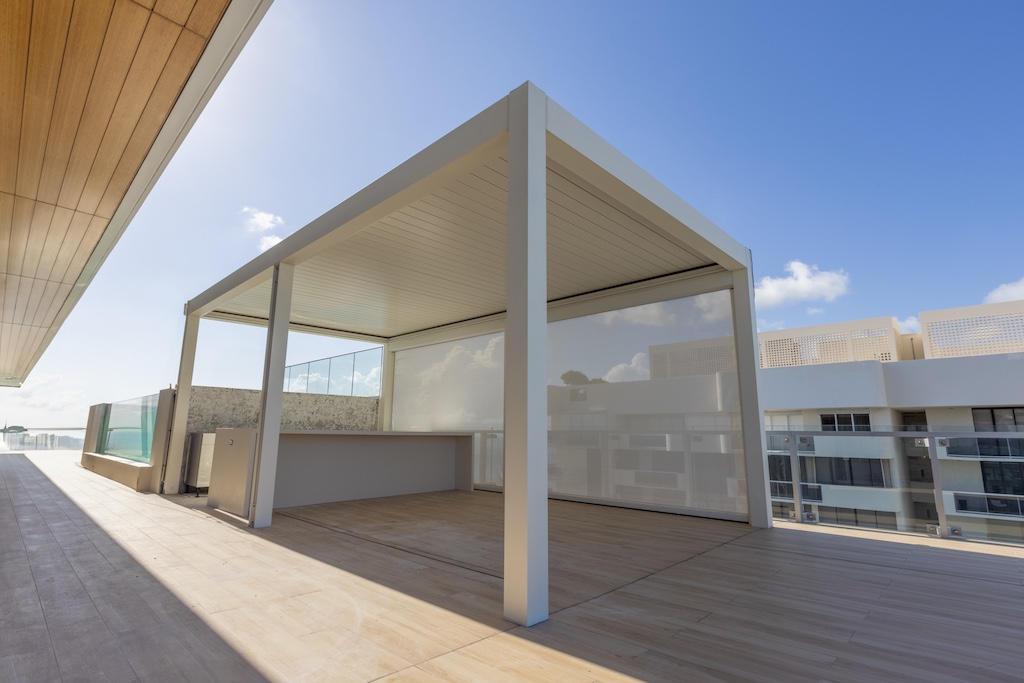
Rooftops are some of the most wasted square footage around, in homes and commercial buildings alike. A bare, flat roof tends to feel like nowhere in particular. Too much sun at noon, too much wind by dinner, and no real reason to linger.
A louvered pergola fixes most of that. Adjust the louvers, and you control how much light comes through, so the space works for morning coffee and midnight conversations alike. Just as important, it gives the roof a shape – a defined “room” that feels like somewhere you’d actually want to be. And it does this without swallowing the skyline views that made you want to be up there in the first place.
In a city, that overlooked rooftop can quickly become the best feature you’ve got.
2. Entryways and Front Yards: Saying Something From the Street
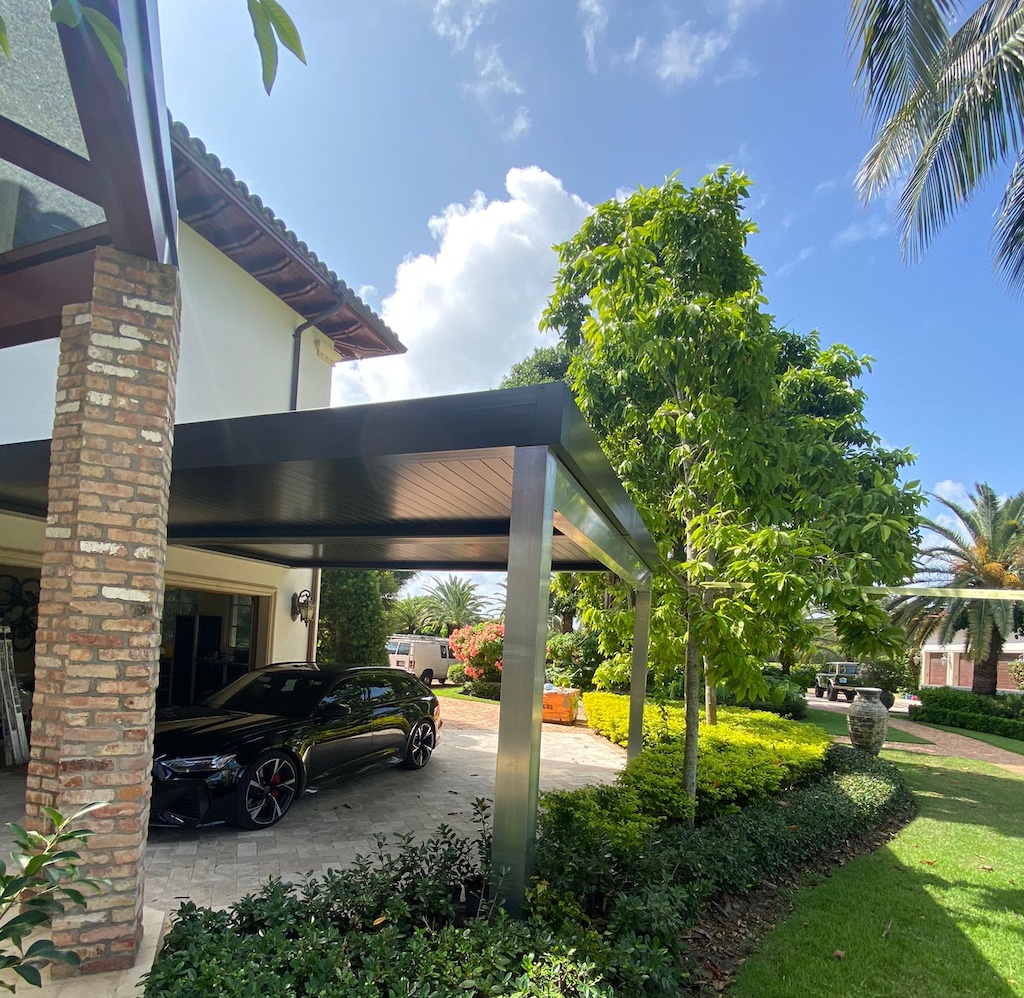
First impressions start at the curb. A pergola placed near the entrance does a lot of quiet work: framing the front door, connecting the driveway to the path, marking the shift from public street to private home. We design plenty of these, and they change how a house reads before anyone steps inside.
There’s a practical side too. A front-yard pergola gives guests cover when it rains, marks your property line without a hard fence, and sets a design tone that the rest of the exterior can follow. Go with a retractable model, and you can adjust it as the seasons turn – wide open in spring, shaded down when July arrives.
The house ends up feeling whole, instead of a plain front hiding a great backyard nobody sees.
3. Walkways and Garden Paths: Leading the Eye Somewhere
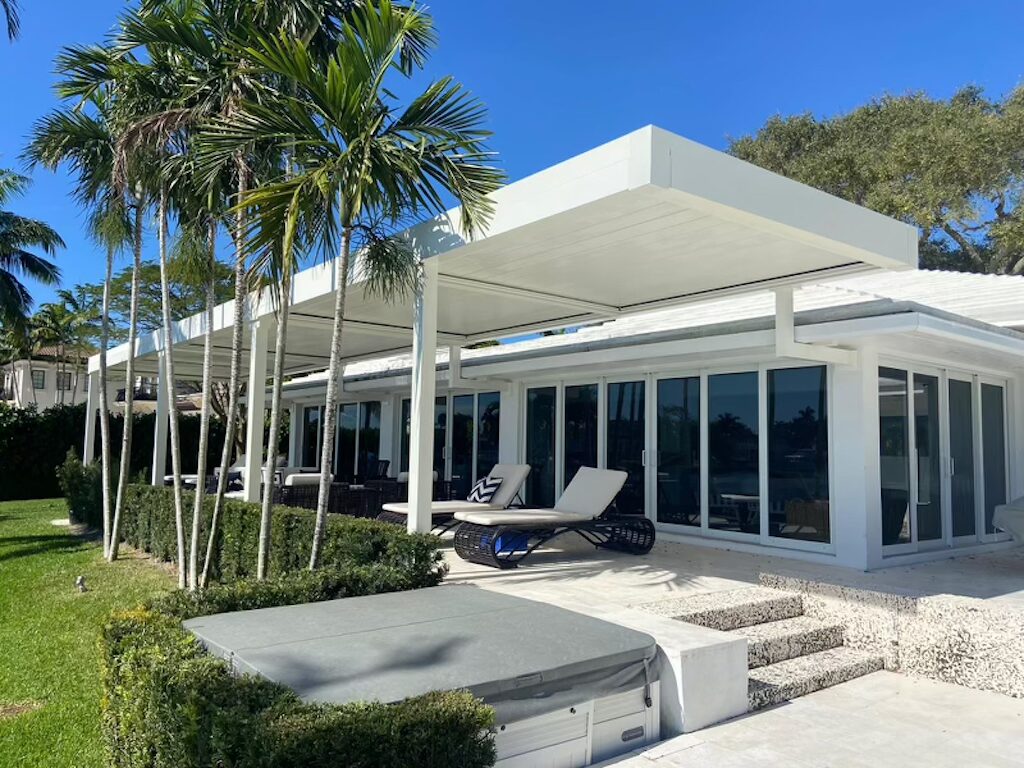
A path with a pergola running overhead is about as timeless as landscape design gets. We build these over existing walkways to create shaded corridors – the kind of passage that makes people slow down and notice what’s growing on either side.
That steady rhythm of beams also does something useful: it points you toward whatever’s worth seeing. A sculpture at the far end, a fountain glimpsed through a gap, a vine trained along the top. Details like these stop being background and start being the reason you walk the path at all.
And a louvered version earns its keep. It shelters plants that prefer dappled light and keeps the walk comfortable even on a scorcher.
4. Deck Extensions: Joining Spaces on Purpose
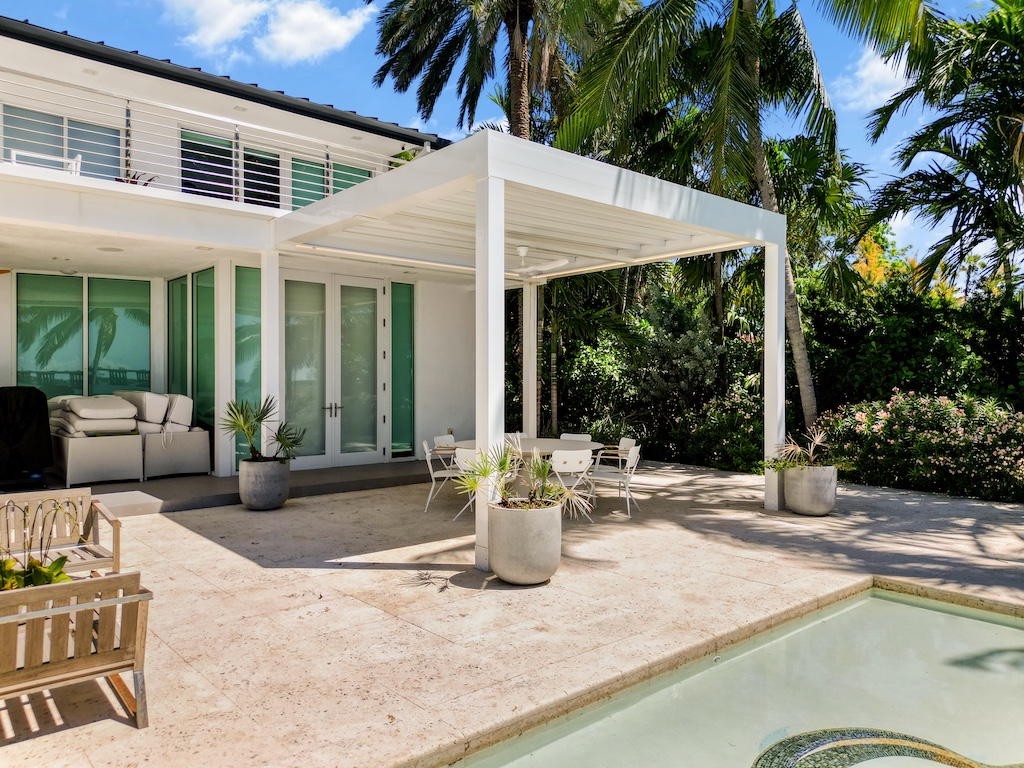
A deck doesn’t have to be one flat expanse. Add a pergola-covered section beside your main platform, and you carve out separate zones – a shaded lounge apart from the open dining area, or a covered stretch linking the deck to a studio or garage out back.
We lean on retractable pergolas here, mostly because they adapt – and as far as outdoor retractable shade solutions for pergolas go, they’re hard to beat. Cloudy afternoon? Pull the roof back and keep it open-air. Sun swinging around? Close the louvers and get your shade. That kind of flexibility means the extension works year-round, not just on the perfect days.
Frequently Asked Questions
Can A Pergola Go On A Rooftop With Weight Limits?
Not before a structural assessment – that always comes first. We work with engineers to confirm what the roof can carry, and where weight matters, we’ll point you toward lightweight aluminum systems.
What Pergola Style Suits A Front-Yard Entryway?
Clean-lined louvered pergolas tend to sit well with modern homes, while timber-finish retractable structures fit more traditional architecture. It’s worth talking it through with our design team to match the pergola to what you’ve already got.
Do Pergola Walkways Work In Any Climate?
They do! Our louvered systems are built for rain, wind, and sun. Whatever the weather, your outdoor structure will be there for you.
Think Past the Patio
A designer pergola is a real investment, and the projects clients remember most are often the ones they never planned on. Rooftop retreat, front-yard statement, something in between – we’ll help you find the right structure for the space you’ve got. Get in touch with Smart Shade Structures and let’s see what your property can do.