A lot of outdoor upgrades sound great in the showroom and disappoint at home. The bioclimatic pergola is one of the few that actually holds up. Spend a season under one and the old patio starts to feel like a missed opportunity.
What is it, though? At its simplest, a bioclimatic pergola is a structure – freestanding or bolted to your house – topped with adjustable louvered slats. You turn those slats to let the sun pour in, shut it out, or angle it somewhere comfortable in between. Close them all the way and most systems will shed rain too. That responsiveness is where the “bioclimatic” part comes from. The thing works with the weather instead of pretending the weather isn’t happening.
Quick map of what’s ahead. We’ll cover how these pergolas function, the benefits that justify the cost, and a handful of things to think through before you commit. By the end you’ll know if one suits your home, and we’re ready to help at Smart Shade Structures if you answer positively.
How the Louvered Roof Works
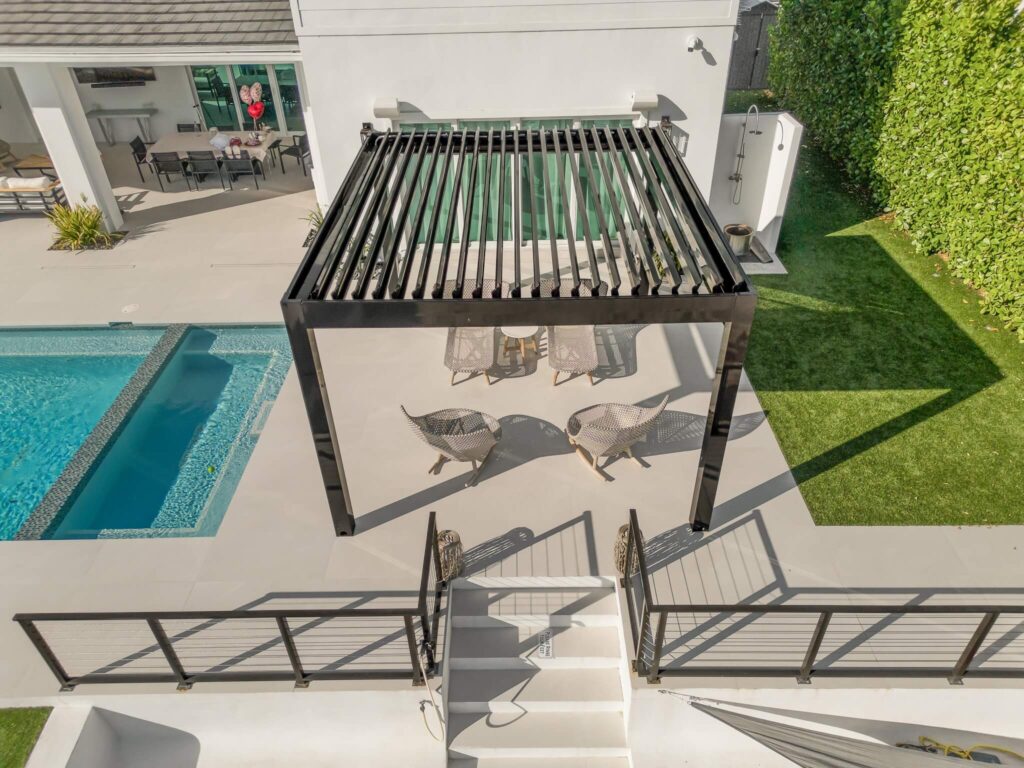
The louvers do all the heavy lifting. Imagine horizontal blades stretched across the top of the frame, the kind you’d see on a big set of blinds laid flat. A motor tilts them, and you control that motor from a remote or an app on your phone.
Cool morning, low sun? Open them up. By afternoon, when the glare turns mean, you tilt them partway and the heat backs off in a hurry. Then the rain shows up. The slats lock tight, the channels built into the frame catch the runoff and send it off the edges, and you carry on. Furniture stays dry. So do you.
Some setups close themselves the moment a sensor catches rain or a gust of wind. Handy, especially if you’re the sort who leaves the cushions out and only remembers them at midnight.
The Benefits Worth Paying For
A decent pergola pulls its weight in a few directions:
- Real temperature control. Adjust the louvers, let the air move, and the space stays usable well past the handful of perfect days each year.
- Weather protection that lasts. Shut slats handle rain and harsh sun alike, so what’s underneath stays livable.
- More usable square footage. It’s nearly an extra room – minus the foundation, the framing, and the extended installation process.
- Lower energy bills. Throw shade across a sun-facing wall and your air conditioner stops straining.
- A bump in property value. Buyers clock quality outdoor living. A solid pergola reads as a real feature, not a clearance-aisle add-on.
That energy point catches people off guard. Block the sun from your home’s hottest side and the difference shows up indoors, not just out on the patio.
What to Consider Before You Buy
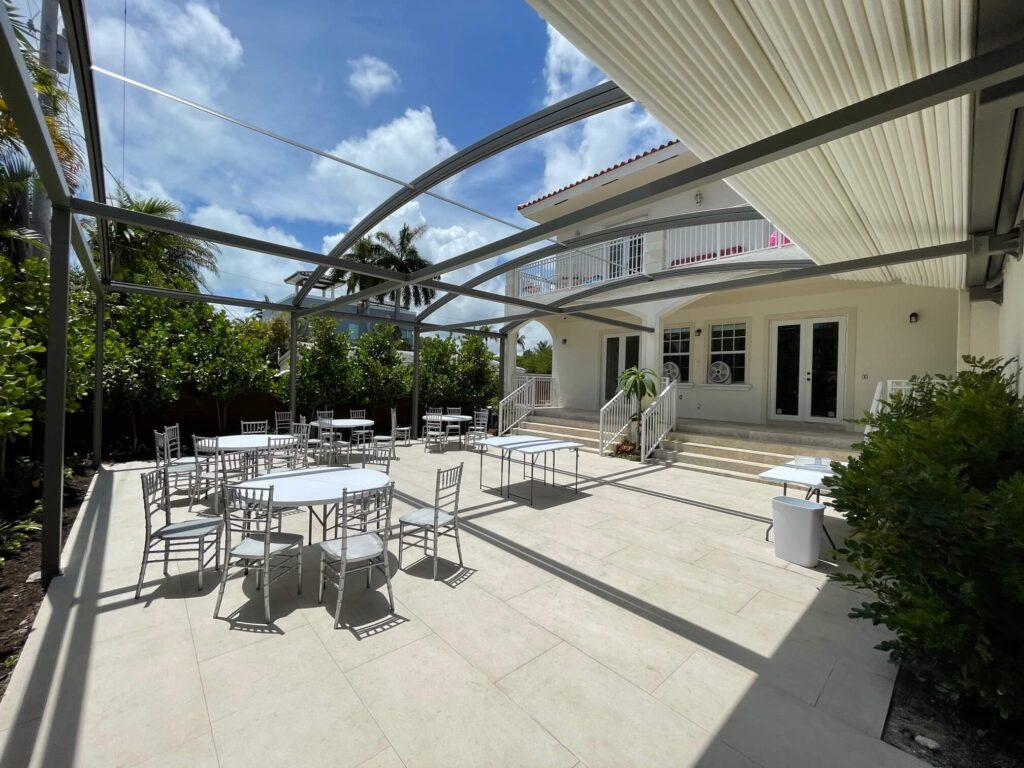
This is a real investment, so a bit of planning pays off. A few things to weigh:
- Material quality. Powder-coated aluminum shrugs off rust and coastal air. Costs more now, saves you fuss later.
- Motor and sensor reliability. The mechanics run daily, and cheap parts give up first. Ask about warranties and whether you can actually get replacements.
- Size and placement. Sun angles, prevailing wind, how it lines up with the house – get these right. A gorgeous unit in the wrong spot still looks wrong.
- Installation. Not a weekend project. A proper crew sorts the anchoring, the wiring, and the drainage so everything works as promised.
- Add-ons. Lighting, heaters, screens, speakers. They stretch the season and keep the space useful after dark.
The usual trap is buying on price alone. The cheapest quote tends to cut exactly the corners you’ll regret a season or two in.
Making the Decision
Shade when you want it, shelter when you need it, and an outdoor room you’ll genuinely use – that’s the offer. Lower cooling costs and lasting appeal come along for the ride.
So walk your yard. Find the spot where you’d spend more time if the weather behaved. Then talk to our team at Smart Shade Structures to bring your vision to life. Do that, and you’ll land on a pergola that still feels like the right call ten years out!